
Beyond the Catalog and into the Architecture of the Hand
An exhibition catalog usually looks backward. It records a show, gathers reproductions, and preserves a curatorial argument after the gallery has closed. An artist book can do something far more independent. It can become the exhibition itself, with its own sequence, atmosphere, scale, and internal logic. Rather than documenting objects installed elsewhere, it constructs a portable encounter in which paper, image, typography, binding, and silence all carry meaning. For collectors considering an artist book as an intimate art object, the essential distinction is that the publication is not secondary evidence. It is an autonomous work.
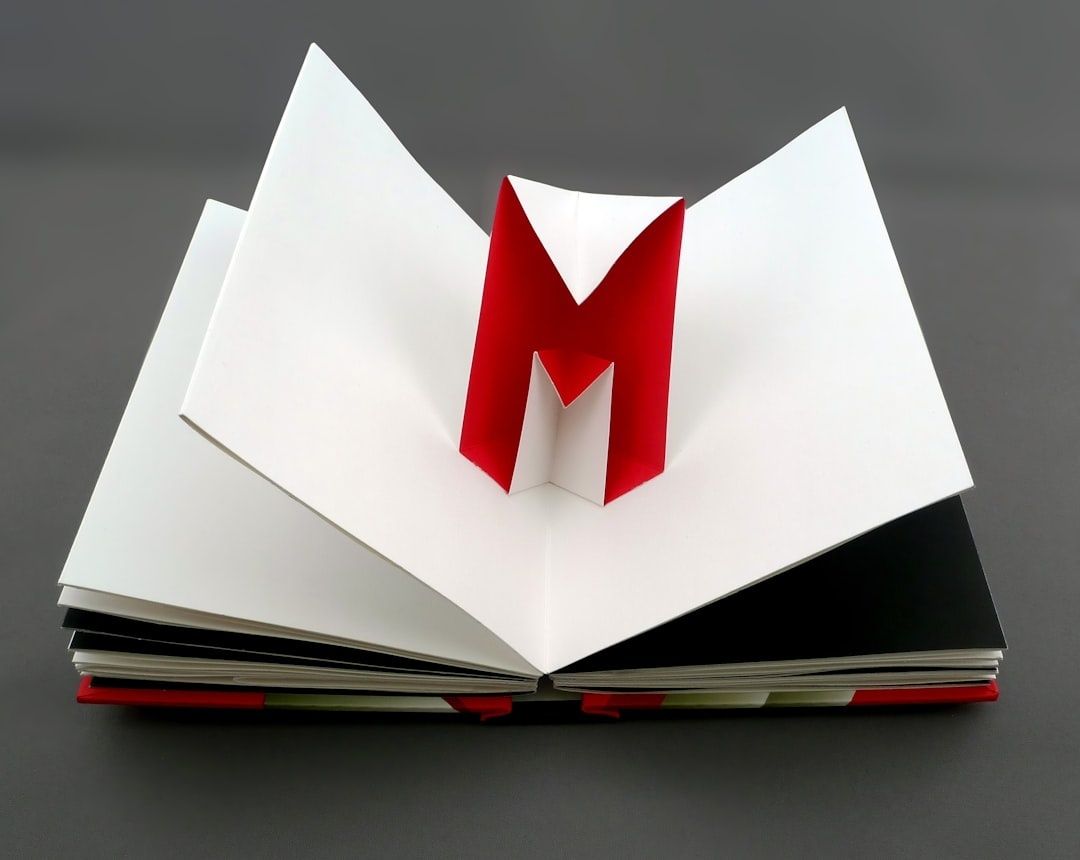
The codex offers a particularly elegant architecture for this autonomy. Its covers establish an exterior threshold, its pages create rooms, and its turning mechanism determines when one visual or verbal space gives way to another. The artist can decide what appears immediately, what remains concealed, and how long a reader must handle the object before its full shape becomes legible. This freedom exists outside many of the gatekeeping structures associated with museums and commercial galleries. The encounter is also physical: fingers lift, separate, fold, flatten, and sometimes hesitate over a surface. Reading becomes a tactile choreography between person and object, closer to moving through a small gallery than consuming a fixed image on a screen.
Challenging the White Cube Through Accessible Distribution
The contemporary artist book emerged in part from a desire to unsettle the institutional conditions of art. The founding of Printed Matter in New York in 1976 by artists including Sol LeWitt and Lucy Lippard marked an important moment in the effort to treat artists” publications as serious, distributable works rather than peripheral merchandise. Printed Matter developed a model in which books could circulate through a nonprofit art organization, a bookstore, exhibitions, readings, and fairs. Its later growth, including the New York and Los Angeles Art Book Fairs, demonstrates how a modest publishing initiative became an international platform for alternative exhibition-making. The organization”s history is outlined by the Observer”s account of Printed Matter.
Affordability and portability are central to this shift. A book can travel in a bag, pass between readers, enter a domestic library, or be purchased without the financial and geographic barriers associated with gallery attendance. Even when an edition is limited and carefully produced, its form can support several levels of access: a collector may acquire a signed copy, while a student or curious visitor may encounter the same project in a reading room or library. The book therefore redistributes the conditions of viewing. It allows contemporary art to move through networks of readers rather than remaining concentrated in a small number of prestigious rooms.
Independent fairs also challenge the assumption that artistic value must be validated by established Western institutions. AFROPHON”, created in Philadelphia in 2018, was developed to increase visibility and distribution for publishers from Africa while questioning the linguistic and geopolitical categories through which African culture is often presented in Europe and North America. Its combination of an art book fair and reading room treated publishing as a site of cultural exchange, historical repair, and community formation. As reported by AIGA Eye on Design, the project included everything from monographic publications to risograph studios and deliberately pursued a decentralized, hospitable model. Such initiatives show that the artist book is not merely a smaller white cube. It can be a grassroots infrastructure with its own geography and values.
| Institutional white-cube gallery | Autonomous book space |
|---|---|
| Fixed architecture and scheduled opening hours | Portable form available across homes, libraries, shops, and fairs |
| Viewer generally encounters objects selected by curators | Artist controls sequence, scale, pacing, and conditions of revelation |
| Access may depend on location, admission, or social familiarity | Distribution can be broad, affordable, and reader-led |
| Works are often separated from ordinary handling | Meaning develops through touch, turning, folding, and repeated use |
Materiality and Craft as Curatorial Voice
In an artist book, material is never simply a neutral support. Rag paper can suggest durability, inheritance, or softness; handmade stock can introduce irregularity and the evidence of labor; a rough surface can slow the hand before an image has even been interpreted. The choice between stark white and a muted, warmer ground changes the emotional temperature of a publication. Paper absorbs ink differently, catches light differently, and creates a distinct acoustic experience when pages move. A book”s substrate may therefore function like the lighting of a gallery, establishing how the reader feels before the subject has been fully understood.
The work of artist and printer Tia Blassingame offers a precise example of material choices carrying social and political meaning. In Harvest: Holding & Trading, she used screen printing to control colors associated with the skin tones of captive Africans. In Colored: A Handbook, paste paper supported a project concerned with Black presence in the United States. Her preference for muted colors and resistance to an anonymous, starkly white page are connected to her attention to color hierarchy in art education and to the natural variation of brown. The material decision is consequently inseparable from the historical conversation. Blassingame”s approach is discussed in Artists” Book Reviews.
Printmaking and book production also reveal the collaborative nature of the medium. A visual artist may establish the conceptual direction, but a printer understands pressure, registration, ink density, and the behavior of a particular sheet. A typographer shapes the voice of language through spacing, weight, and proportion. A binder determines how a reader encounters the work physically. This synthesis can be visible in every detail, from a slightly misregistered screen print to a precisely aligned letterpress impression. The result is neither illustration placed inside a container nor design applied after the fact. It is a negotiated artwork in which craft becomes part of the curatorial voice.
- Paper establishes touch, weight, opacity, and the degree of visual comfort.
- Ink and pigment determine surface presence, saturation, transparency, and historical association.
- Typography creates rhythm, authority, hesitation, intimacy, or distance.
- Binding controls how the body opens, holds, and navigates the work.
- Scale decides whether the book feels private, ceremonial, performative, or sculptural.
Structural Pacing and the Spatial Choreography of Binding
Binding is a temporal device. A conventional codex offers a measured progression, while an accordion can expand a continuous landscape across a table or refuse the assumption that a book must have a beginning and an end. French folds conceal information inside an apparently closed sheet, turning discovery into an act of opening. Exposed spines reveal construction and emphasize that the object is assembled rather than magically complete. The mechanics of the book can therefore dictate suspense, interruption, repetition, and release. The Henry Moore Foundation”s collection includes examples ranging from concertina publications to altered and sculptural books, demonstrating how structure can become the primary carrier of an artwork”s spatial idea.
Sequencing is equally important. Designer and photographer Rui Wang describes visual work as a vessel for storytelling, with typography, layout, scale, white space, and editing shaping emotional movement. That principle applies powerfully to artist books. A restrained image may need several quiet pages around it; a dense spread may operate like a crowded room; a blank page can create the pause required for an earlier image to remain active. The artist”s book does not merely show a series. It choreographs the reader”s attention and uses physical duration as part of its meaning.
- Approach the cover as the entrance façade. Its texture, title, and weight establish the first expectation.
- Cross the threshold through the endpapers, opening leaves, or initial blank pages, which may function like a lobby or transitional corridor.
- Move through sequences as each spread presents a room, view, argument, or fragment, with page size and white space controlling the speed of attention.
- Encounter thresholds in folds, inserts, changes of paper, or abrupt typographic shifts that interrupt a predictable route.
- Leave and return through the closing pages and cover, recognizing that a portable exhibition remains available for re-entry and can change with repeated readings.
Building an Intimate Collection of Portable Exhibitions
Collecting artist books begins with understanding the difference between a mass-produced bookwork and a limited edition. A broadly distributed publication may offer an accessible and important entry into an artist”s ideas, especially when the design and sequencing remain integral to the project. A limited edition may include original prints, hand binding, unusual materials, a signed colophon, or a numbered run. Scarcity alone does not determine quality. Look for a clear relationship between concept and production, evidence of thoughtful printing, accurate edition information, and a condition appropriate to the object”s materials.
For new collectors, the most useful approach is to buy with attention rather than haste. Read the book in person whenever possible. Notice whether the binding opens comfortably, whether paper choices contribute to the subject, and whether the sequence rewards repeated handling. Ask for information about edition size, printer, binder, publication date, and conservation requirements. A strong collection can combine affordable contemporary editions with rarer fine press works. It may also include books connected by a theme such as landscape, migration, memory, political history, or the relationship between language and image.
Preservation begins with respectful handling. Clean, dry hands are preferable to gloves for most paper books because gloves can reduce tactile control, but fragile surfaces and photographic materials may require specialist advice. Store books away from direct sunlight, fluctuating humidity, heat, and pressure from tightly packed shelves. Do not force a binding flat, place heavy objects on delicate covers, or use adhesive markers on pages. For rare or structurally complex works, archival enclosures and advice from a conservator are worthwhile investments. Collections such as the Henry Moore Foundation library demonstrate the range of formats that may require different approaches to storage and display.
- Begin with reliable venues such as Printed Matter, nonprofit art bookstores, artist-run publishers, and specialist dealers.
- Visit book fairs to compare editions directly and speak with artists, printers, binders, and publishers.
- Explore archives and libraries where rare or sculptural works can be consulted under appropriate conditions.
- Look for book arts centers such as the San Francisco Center for the Book, which presents exhibitions, workshops, publications, and public programs.
- Record provenance by retaining invoices, catalog sheets, exhibition notes, and edition documentation.
Bringing the Museum Home to Your Shelves
The artist book remains one of contemporary art”s most flexible exhibition sites because it can be intimate without being minor, collectible without becoming inaccessible, and carefully crafted without losing conceptual force. Its gallery is measured in pages rather than square feet. Its display system is the binding. Its visitor is not asked to stand at a respectful distance but invited to participate through touch, attention, and repeated return. Every decision, from the tone of the paper to the timing of a reveal, can become part of the work”s argument.
To collect or read an artist book is therefore to accept a more active role in exhibition culture. Open it slowly, examine its construction, follow its silences, and allow the object to determine its own pace. A shelf of such works is not simply a library or a record of purchases. It is a personal constellation of handheld galleries, each capable of changing scale, mood, and meaning whenever it is opened.